A postcard from Cádiz
Postcard 1 of 8
Imagine you find this in a box at a flea market: an old postcard of Cádiz, written by hand to a brother. Turn it over and read it.
PostcardAtlas Postal Universal · Andalucía
The stamp
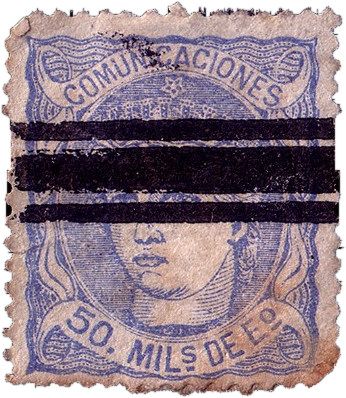
Spain, 1870. 50 milésimas, ultramarine
Issued by the Provisional Government that ran Spain after the revolution of 1868, between the fall of Isabel II and the arrival of a new king. It was paid in milésimas de escudo, a currency already on its way out.
The woman is not a queen or anyone real: she is an allegory of Spain. The black bars are the postmark: this copy was cancelled at the post office without ever travelling on a letter.
Public domain. Scan from Wikimedia Commons
On the front
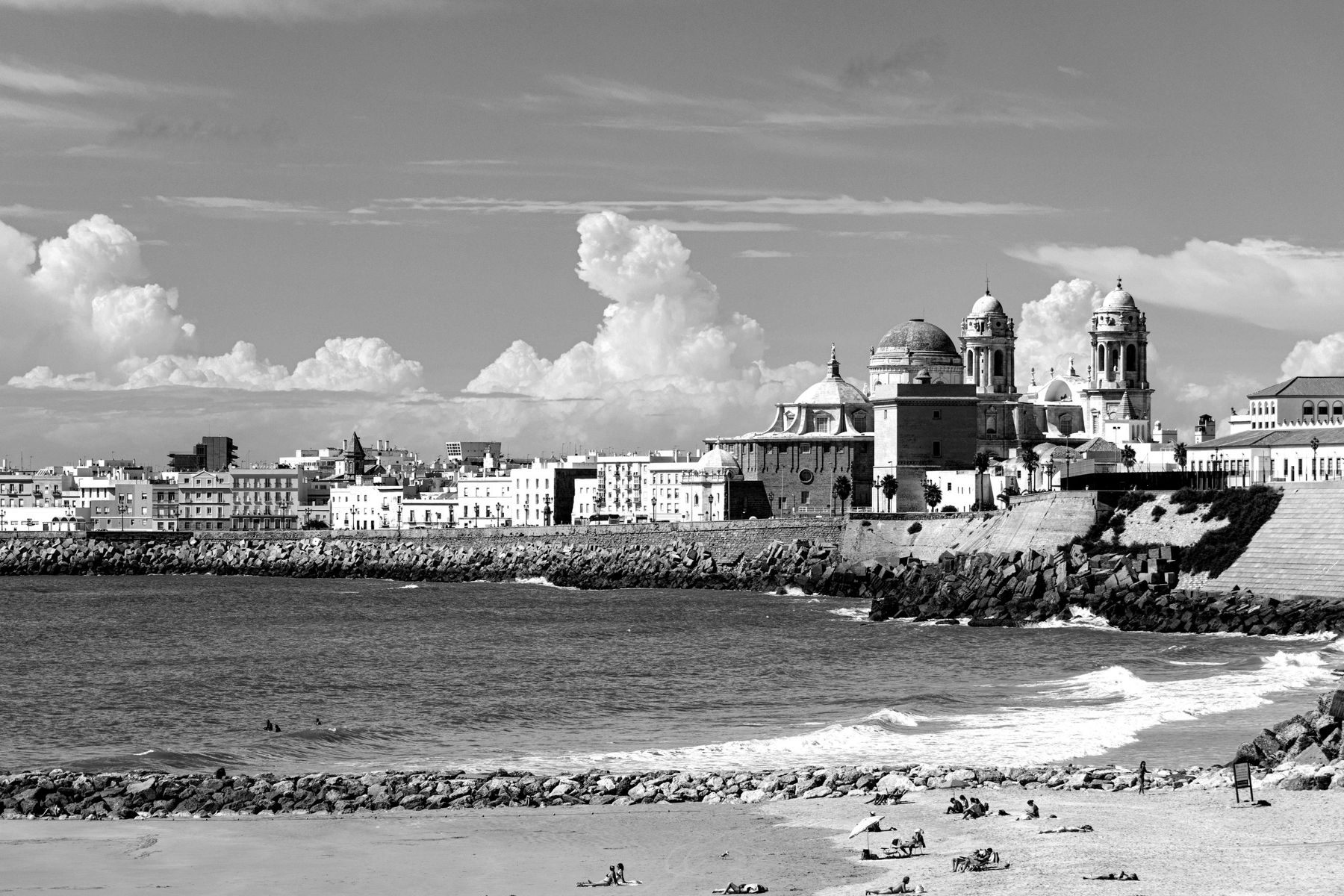
The photo looks across the beach at the old town, on the Atlantic side, with the cathedral rising over the sea wall. Its proper name is the New Cathedral; people in Cádiz also call it the cathedral of the Americas, because it was begun in the years when the city’s port grew rich on the trade with the New World.
That trade is in the food too. Tomatoes and peppers came from the Americas, and Cádiz was the door they came through. The alboronía on this postcard is an old dish, older than its tomato: the raw tomato folded in at the end is the New World arriving in it.
Behind the sea wall is La Viña, the old fishermen’s quarter, where the tapas bars are; the market is a few streets further in.
The food
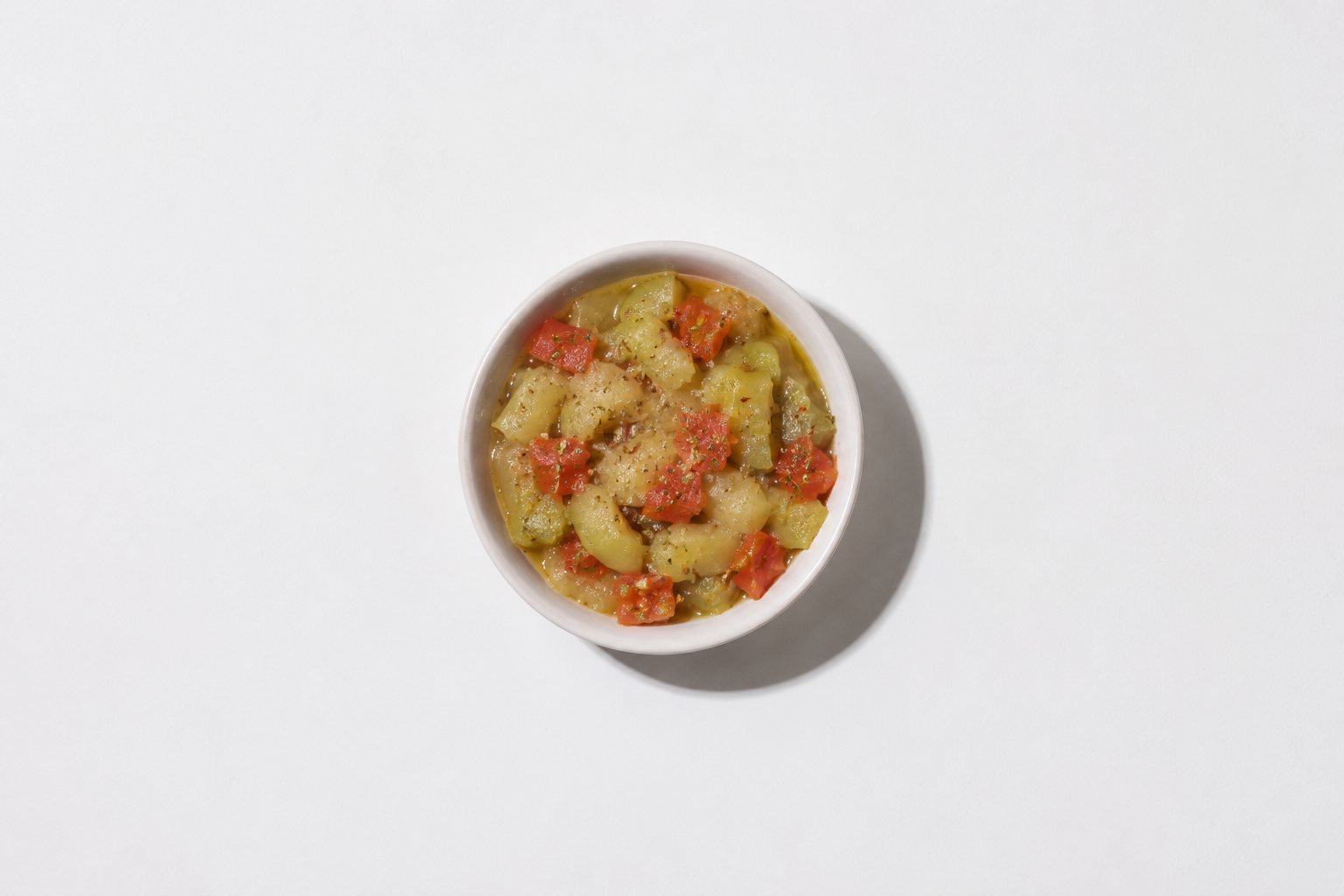 The recipe on this postcardAlboronía / Courgettes with Cumin and TomatoCádiz · Vegan · 7 ingredients · 5 stepsAlboronía is a vegan courgette dish from Cádiz, in Andalusia: peeled courgettes cooked in olive oil with garlic until they break apart, seasoned with oregano and cumin, and finished with raw diced tomato.On the recipe page: the full ingredients and method, where the dish comes from, a note from the market, and a version you can print.Cook the alboronía
How Cádiz eats now
Cádiz is famous for the sea. But the everyday food of its bars is just as much cold tapas from the vegetable patch: papas aliñás, potatoes dressed with oil, sherry vinegar and parsley; piriñaca, tomato and green pepper chopped very small; dressed carrots.
The heart of it is the Mercado Central, opened in 1838 on the site of an old convent orchard and often called the oldest covered market in Spain. Inland, in the roadside ventas of the hills, winter means berza, a pot of chickpeas, beans and greens, and tagarninas, a wild thistle picked in the cold months and cooked with garlic and bread.
The book
Why these dishes
The Atlas is built from regional recipe collections, one per province, and keeps the dishes whose vegetables, pulses and bread carry the meal. In Cádiz that leaves out the fish and keeps what fed most households most days: chickpeas with chard, dressed potatoes and carrots, tomato soup, hot gazpacho, and sweets for feast days. Fourteen dishes from Cádiz made the selection, as many as from Córdoba and more than from any other province.
From Cádiz, in the Atlas
- AlboroníaCourgettes with Cumin and Tomato. The full recipe is on the siteRecipe
- Castañas pilongas con habichuelasDried chestnuts with beansIn the book
- Garbanzos como conejoChickpeas cooked like rabbit, with no rabbitIn the book
- Garbanzos con acelgasChickpeas with chardIn the book
- Gazpacho calienteHot gazpacho, for winterIn the book
- PanizasChickpea-flour frittersIn the book
- Papas aliñásDressed potatoesIn the book
- PerrunillasCrumbly biscuits with pine nutsIn the book
- PestiñosFried pastries with aniseIn the book
- Sopa de tomateTomato and bread soupIn the book
- SultanasCoconut macaroonsIn the book
- Tocino de cieloRich egg-yolk custardIn the book
- Zanahorias aliñadasDressed carrotsIn the book
Vegetarian & vegan · Eight provinces
The Andalusian
Food Atlas
The vegetable cooking of southern Spain, province by province
The book
Every dish on this list but one is only in the book
The Atlas isn’t on sale yet. Pre-orders open with the eighth postcard, and the people on the list hear first.
Postcards by email
Eight emails, one a week, then word when pre-orders open. Nothing else. Privacy
The history
Where it is
Cádiz is the south-western tip of Andalusia, where Spain meets the Atlantic. The city sits on a narrow strip of land almost surrounded by water; the province runs inland from beaches, salt pans and sherry country around Jerez up to the hills around Grazalema, often called the rainiest town in Spain.
It is old, and proud of it. Classical writers dated its Phoenician founding to around 1100 BC; the oldest remains found under the city so far are from the late 9th century BC. Its name has moved from Gadir to Gades to Cádiz. In the 18th century its port held Spain’s monopoly on trade with the Americas until 1778, and a great deal of what Spain learned to eat from the New World came ashore here.
- c. 1100 BCFounding date given by classical writers
- 9th c. BCOldest remains found under the city
- 1778End of the port’s monopoly on trade with the Americas
- 1838The Mercado Central opens
- 1849Fernán Caballero’s tomatoes the size of oranges
- 1929Dionisio Pérez writes down the food of Cádiz
How it ate before
Dionisio Pérez also tells the story that, in the war against Napoleon, French soldiers marching from Jerez saw the roofs of Rota bristling with cannon. They were pumpkins, drying on the parapets, and the soldiers turned back.
In 1929 the food writer Dionisio Pérez, born in Grazalema, described a cooking of poor kitchens that people never forgot: hot gazpacho for farmhands and shepherds in winter, white garlic soups with bread, a tomato soup he traced to a recipe book of 1795. Eighty years before him, the novelist Fernán Caballero wrote of Cádiz gardens with tomatoes the size of oranges.
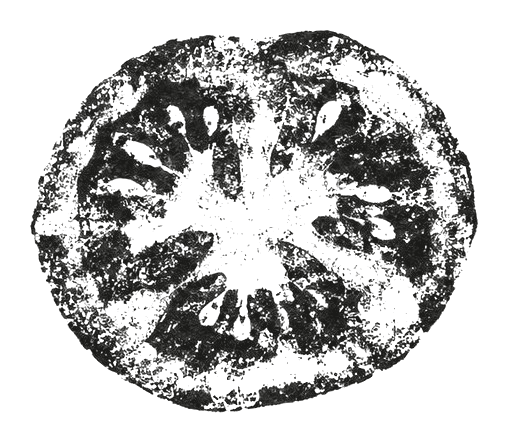
“Between Rota and Sanlúcar de Barrameda, the traveller can see the navazos, which grow vegetables with a flavour all their own. They are hollows dug into the beach dunes, and twice a day their floor is dampened by fresh water, pushed up by the pressure of the incoming tide.”
If you go to Cádiz
Where to eat it
- Mercado Central de AbastosPlaza de la LibertadThe 1838 market. Vegetable stalls in the morning; tapa counters around the edge. Closed Sundays and Mondays.
- El Faro de Cádiz (opens their website)Calle San Félix, 15 · La ViñaThe city’s classic restaurant, traditional cooking by the season. Ask for what comes from the garden. Books online.
- Taberna El Tío de la TizaPlaza del Tío de la Tiza, 12 · La ViñaFamily tavern since 1979, tables out on the square; known for its piriñaca and papas aliñás. No website: book by phone. +34 956 21 20 82
- The ventas of the Sierra de CádizAround GrazalemaRoadside inns where, in winter, berza with tagarninas is on the menu.
Checked against published guides, November 2026. Hours change: check before you go.
Be a good guest
Cádiz is a city people live in, and it is running out of homes. It has the most holiday flats per resident of any Andalusian provincial capital, most of them in the old town, and neighbours have marched against being priced out of it.
- Sleep in a hotel or a hostal, not a holiday flat. Since 2022 the city plan has kept new holiday flats out of most old-town buildings. A flat that is a home for a week is a flat that is not a home for a year.
- Go to the market to shop. Buy your tomatoes from the stall, in the morning, when it is busy with people doing their week’s shopping. Ask before you photograph someone.
- La Viña is a neighbourhood. People live above the bars. Late at night, keep your voice down on the way home.
- Come outside July and August. The city is fuller in summer than at any other time, and most of what is in this postcard is better in autumn and winter.
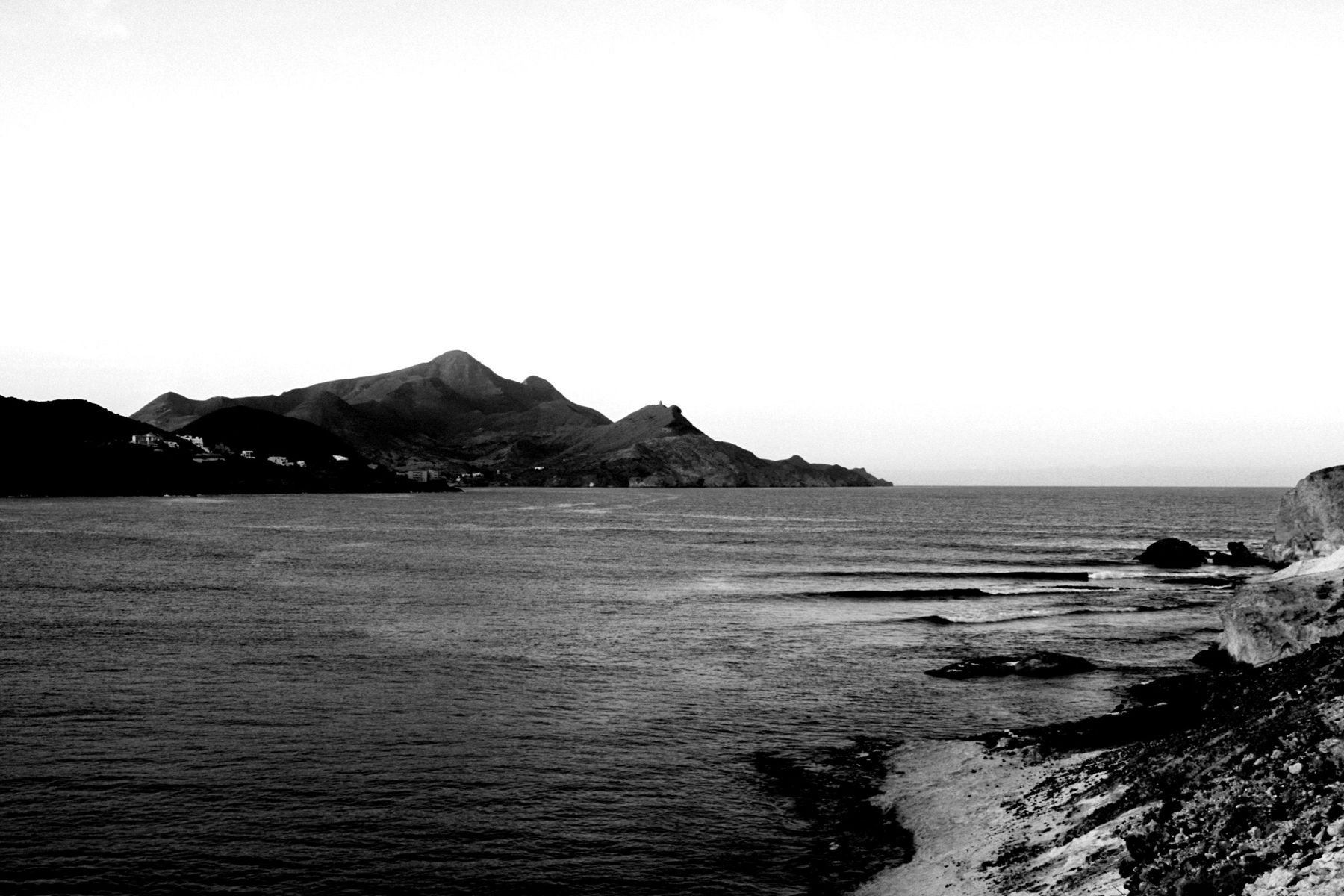 ALMERÍA — 2Vista de la costaAtlas
Seven more to come
Next Sunday, Almería
This was the first of eight. Each one comes like this: the place, a dish and its story, and the recipe. Free, by email. The eighth opens pre-orders for the book.
Postcards by email
Eight emails, one a week, then word when pre-orders open. Nothing else. Privacy
Sources
- Dionisio Pérez, Guía del buen comer español (Madrid, Patronato Nacional del Turismo, 1929), pp. 87, 92–97. Translation: The Andalusian Food Atlas.
- Fernán Caballero, La gaviota (1849).
- Lorenzo Abad Casal and Ramón Corzo Sánchez, “Gadir / Gades / Cádiz”, Universidad de Murcia (dating of the oldest remains).
- Diario Bahía de Cádiz, “Explorando Cádiz” (trade with the Americas until 1778).
- Patronato Provincial de Turismo de Cádiz, Gastronomía de Cádiz (Grazalema, berza de tagarninas).
- Lonely Planet and Diario Bahía de Cádiz on the Mercado Central de Abastos (1838).
- PORTUS, “Cádiz en el espejo de su puerto” (the New Cathedral, or cathedral of the Americas).
- Diario Bahía de Cádiz, 2022–2025: holiday flats per resident (Junta de Andalucía data), the 2022 change to the city plan, and the Cádiz Resiste march.
- UN Tourism, World Committee on Tourism Ethics, Tips for a Responsible Traveller (revised 2020).
- Photograph on the postcard: Jordi Vich Navarro, Unsplash.