Sponge Rolls with Toasted Cream
Pionono de Santa Fe
Granada · Vegetarian (contains egg and milk) · Serves 6
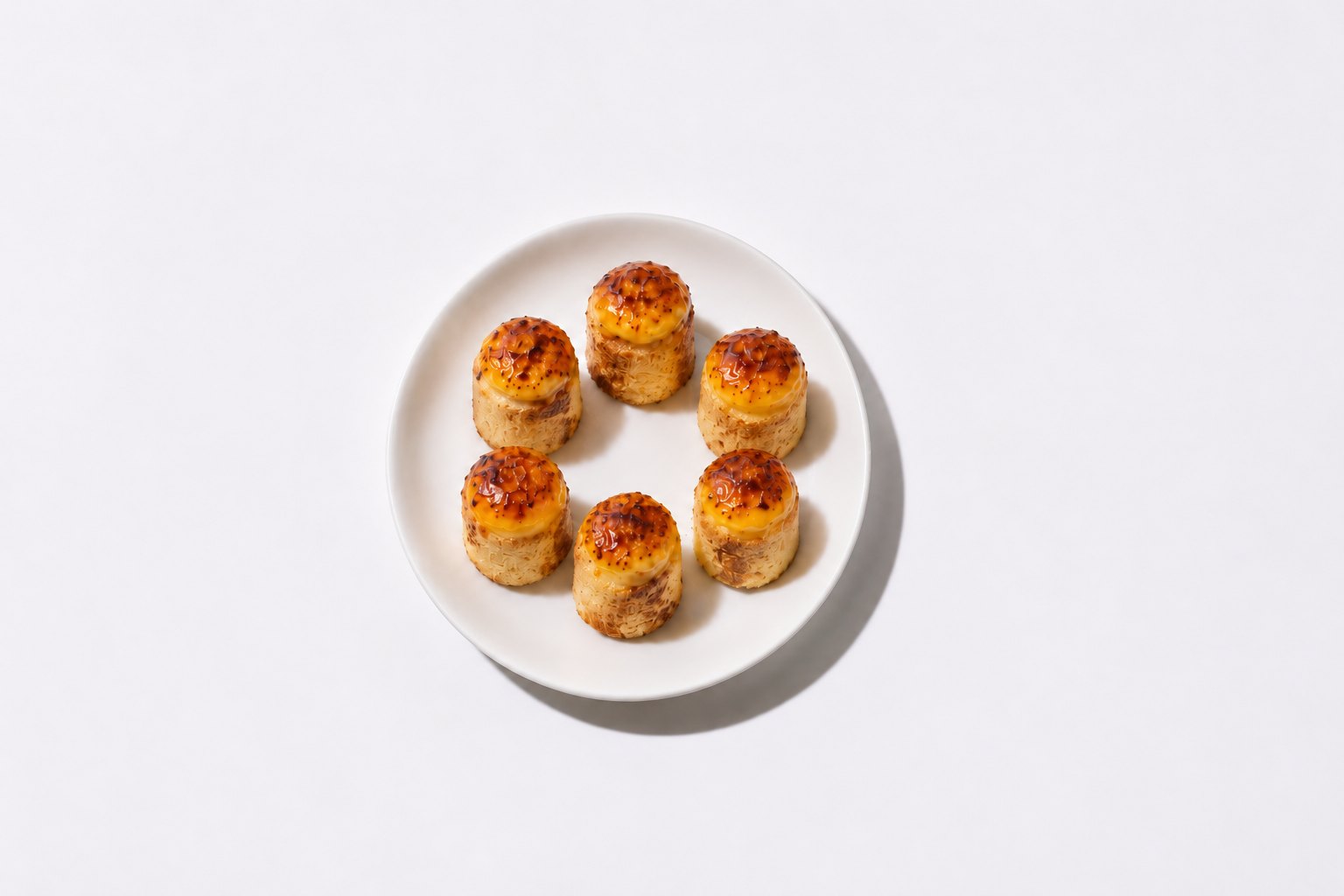
The pionono is a small pastry from Santa Fe, near Granada: thin sponge brushed with rum syrup and cinnamon, rolled around custard, cut into short pieces and topped with more custard, caramelised.
Allergens / Egg, milk, wheat (gluten). The syrup contains rum
Where it comes from
Santa Fe, a few miles west of Granada, is the town where Columbus signed his agreement with the Catholic Monarchs in 1492. Ask there, though, and you’ll hear about the pionono. The story goes that a local pastry cook, Ceferino Isla, created it in the late 19th century and named it after Pope Pius IX, Pío Nono in Spanish: a stubby roll of sponge for the pope’s round figure, a cap of toasted cream for his skullcap.
Not everyone agrees on the date, and some say little cakes called pío nonos existed elsewhere in Spain before that. His pastry shop in Santa Fe is still run by his family. This home version keeps the essentials: thin sponge brushed with rum syrup and cinnamon, spread with custard, rolled, cut small and topped with more custard and caramelised.
The recipe
Ingredients
For the sponge
- 3 egg yolks
- 5 egg whites
- 60 g (5 tbsp) sugar
- 35 g (¼ cup) cornflour (cornstarch)
- 30 g (¼ cup) plain (all-purpose) flour
- 2 tbsp milk
For the custard
- 2 eggs
- 100 g (½ cup) sugar
- 15 g (2 tbsp) cornflour (cornstarch)
- 70 ml (scant ⅓ cup) water
- 2–3 drops vanilla extract
For the syrup
- 100 ml (scant ½ cup) water
- 100 g (½ cup) sugar
- 1 tbsp rum
To finish
- Ground cinnamon
Method
- Make the custard. Whisk the eggs with the water, sugar and vanilla, pour into a saucepan and whisk in the cornflour. Cook over a low heat, stirring, until thick. Press cling film onto the surface and leave to cool.
- Make the sponge batter. Beat the yolks with half the sugar until pale, then stir in the milk and both flours. Whisk the whites with the rest of the sugar until they hold their shape, and fold them gently into the yolk mixture until smooth.
- Bake. Spread the batter in a thin, even layer on a baking tray lined with baking paper and bake at 200 °C (400 °F) for 8 minutes.
- Turn it out. Loosen the sponge onto a clean tea towel, then turn it back onto a clean sheet of baking paper.
- Make the syrup. Warm the water and sugar until the sugar dissolves, then stir in the rum.
- Fill and roll. Brush the sponge lightly with the syrup, dust it with cinnamon and spread it with some of the custard. Cut it in half lengthways and roll each half into a tight log.
- Cut and finish. Cut the logs into equal pieces and stand them upright in paper cases. Top each with a little more custard and caramelise the tops with a kitchen blowtorch.
From The Andalusian Food Atlas / theandalusianfoodatlas.com
Questions
Where does the pionono come from?
From Santa Fe, a town a few miles west of Granada. The story goes that the pastry cook Ceferino Isla created it in the late 19th century, though not everyone agrees on the date.
Why is it called pionono?
After Pope Pius IX, Pío Nono in Spanish. The roll of sponge is said to stand for his figure and the toasted cream for his skullcap.
Can I make piononos without a blowtorch?
Yes. Slide them under a very hot grill for a minute, and watch them.
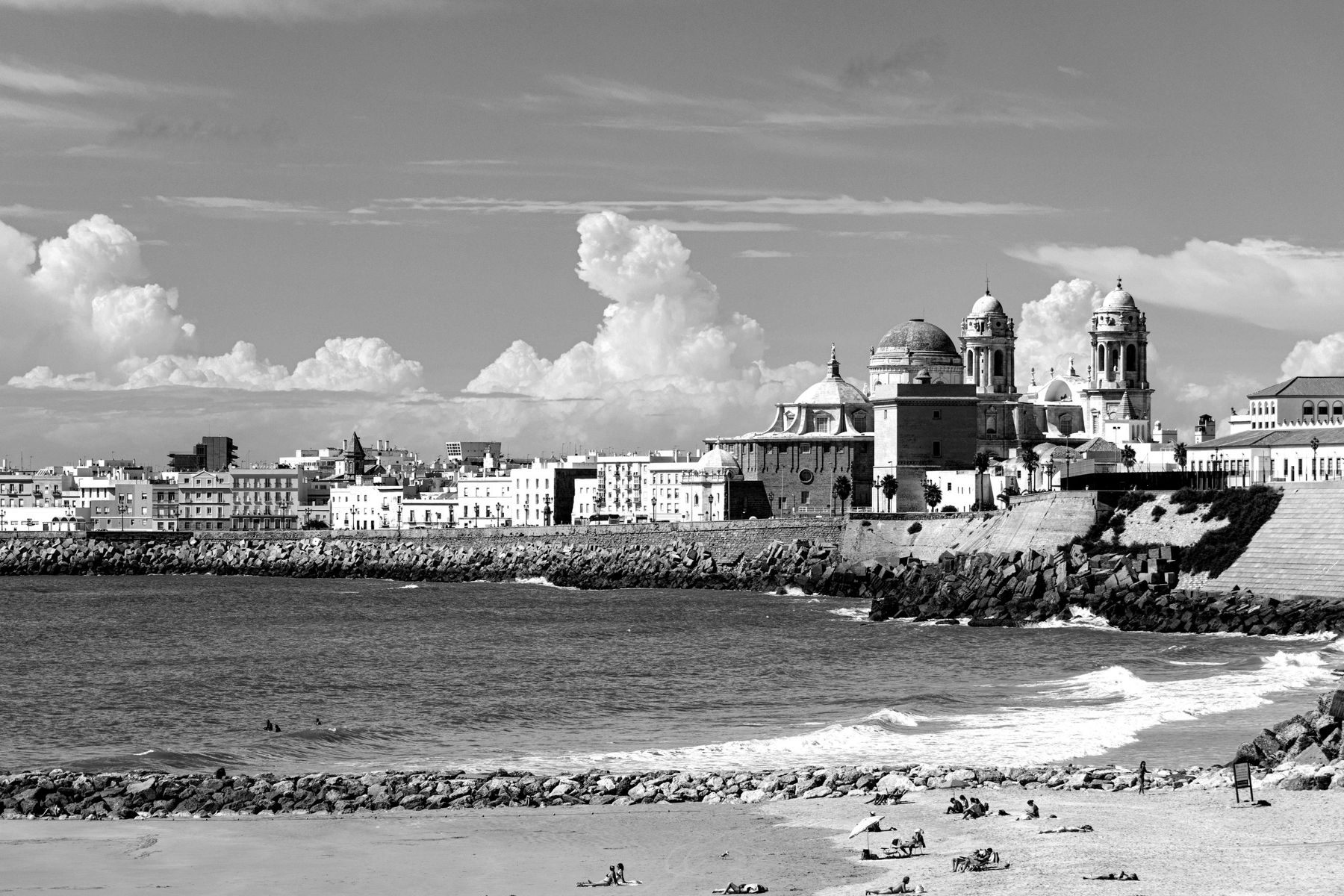 CÁDIZ — 1La Catedral desde la playaAtlas
Free, by email
A postcard from Andalusia every Sunday
This recipe is from The Andalusian Food Atlas, a book of vegetable dishes from all eight provinces. Until it’s out, we send one province a week: the place, a dish and its story, and the recipe.
Postcards by email
Eight emails, one a week, then word when pre-orders open. Nothing else. Privacy / Read the first postcard
More from the catalogue
Sources
- Real Academia de Gastronomía, “Piononos”.
- Escapada Rural, on the history of the Santa Fe pionono.
- Directo al Paladar, on the Santa Fe pionono.
Published November 2026.